Sustainability
is our starting point and the very essence of our company.
Sustainability guides our approach and is a founding principle in the design of our products and processes.
As a Benefit Corporation, we have formally embedded in our bylaws our commitment to producing healthy food in a sustainable way, reducing environmental impact, fighting waste and creating value for people and communities.
We are inspired by the vision of the Brundtland Report: for us, promoting sustainable development means meeting the needs of the present without compromising the ability of future generations to meet their own needs.
Saving water, one drop at a time.
How many times have you been told that “Water is precious”?
That is not wasted breath but an undeniable and sad truth.
Water resources have decreased by 20% in the last 20 years and over 3 billion people have limited access to this precious resource. Agriculture alone is responsible for 70% of water usage globally. (1)
The time has come to do better! As demonstrated by our Life Cycle Assessment (LCA), our advanced lettuce-growing technology allows us to save 96% of water compared to open-field agriculture (9), using only the amount truly needed by our plants.
Our salads grow in a protected environment and do not require washing (2,3).
Drop by drop, we are driving change.

Mother Earth is plan A, and there is no plan B.
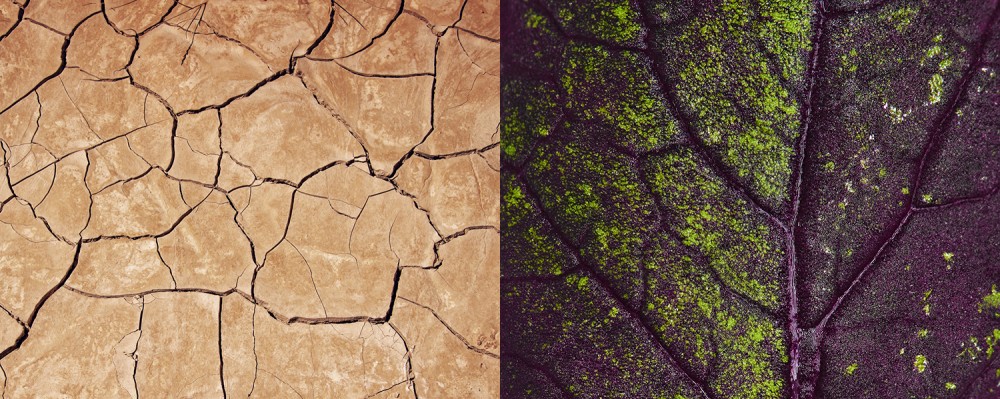
Almost 40% of the surface of our Planet is used by agriculture. In the last 40 years, 30% of arable land has become unproductive, and the remaining farmable soil is constantly decreasing. (4,5)
Cultivable land is becoming increasingly scarce, but we can say we have found our space. Through vertical farming, we save 99% of land compared to open-field agriculture, as demonstrated by our LCA analysis (10).
In fact, for the same surface area, we produce 100 times more than traditional agriculture (3,6).
This may sound heavenly, but it's actually down to Earth.
Overpopulation and urbanization need action.
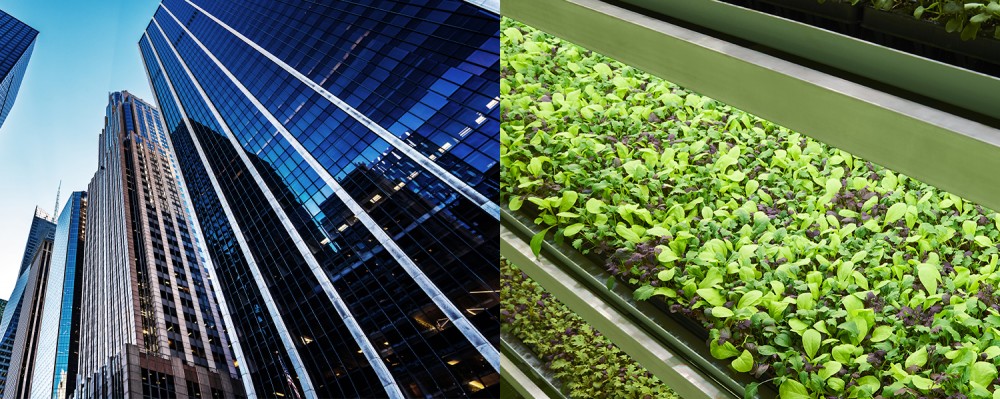
It is estimated that over the next 30 years our Planet will become increasingly overpopulated, reaching nearly 10 billion people, mostly concentrated in urban areas (4).
In this context, vertical farming can help cities become more self-sufficient from an agri-food perspective, producing food close to urban centres, near the final consumer, and delivering ultra-fresh products that are always available.
Waste not, want not.
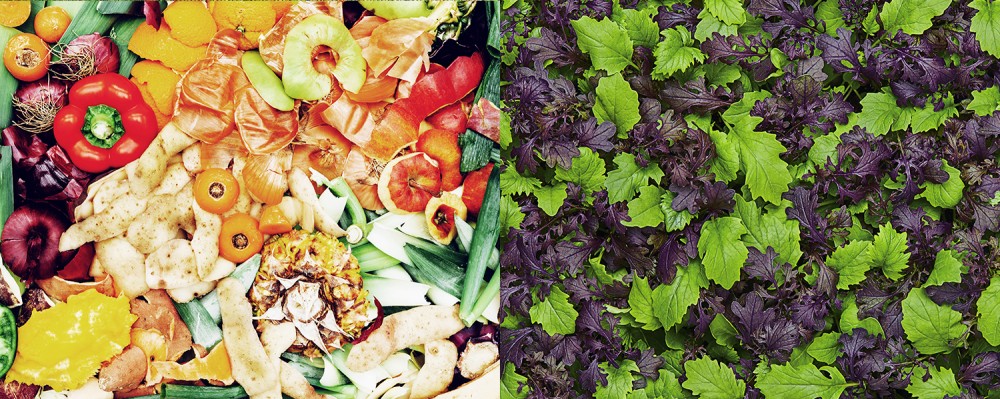
Every year, more than 1.3 billion tonnes of food are wasted — about four times the amount needed to feed the 800 million undernourished people worldwide (7).
In agriculture, this food waste corresponds to the loss of 250 km³ of drinking water per year (around 100 million Olympic-sized swimming pools!) (8). This means that almost one third of arable land is used to produce food that ends up in the bin.
With our extremely short and integrated supply chain, we aim to produce close to consumption centres and only what is needed. But that’s not all. We donate unsold products to non-profit organisations. In 2025, we donated food with a value exceeding €200,000. In this way, we prevent food waste and support local communities.
Impact and ESG – Our Sustainability Journey
In our sustainability reports and Impact Reports, we use concrete and verifiable data to share Planet Farms' journey toward an increasingly sustainable development model.
The 2023 Sustainability Report offers our first structured reporting of the results achieved, investments made, and the priorities guiding our decisions.
The 2024 Impact Report, prepared in our capacity as a Benefit Corporation, provides an in-depth look at the environmental, social, and organizational impact of our activities, transparently illustrating how we integrate sustainability, social responsibility, and governance into our business model. The 2025 Impact Report , currently being finalized, will be published as soon as it is available, in line with our commitment to transparent reporting and continuous improvement.
EDUCATIONAL AND SOCIAL INCLUSION PROJECTS
Every day, we cultivate an idea of sustainability that goes beyond the product itself. For this reason, we invest in educational and social inclusion projects, sharing our values with the communities in which we operate.
In 2025, the Planet Farms Group's employees dedicated over 240 hours to various volunteering activities.
As an example, through the Coltiviamo il Futuro programme, we work with middle schools in the Milan area to help younger generations understand how much water is behind the food they eat and why making more conscious food choices can truly make a difference.
We delivered 42 workshops in 10 schools during the 2023–2024 school year, and 24 workshops in 5 schools during the 2024–2025 school year, installing small vertical farms inside classrooms.
Together with Cooperativa Agape RisorsaPiù Onlus, over the years we have developed an “agricultural discovery” programme dedicated to people with disabilities and complex family backgrounds, aimed at fostering social inclusion.
We installed a small vertical farm for growing vegetables and an outdoor garden, where participants worked and cared for plants under the guidance and support of a dedicated team.
From 2024 to today, we have ensured one monthly session alternatively for sowing and harvesting.
FOR OUR PLANET FARMERS
Every day, we cultivate the wellbeing of our Planet Farmers by creating a working environment where people can feel good, grow and feel part of a team.
We listen to our employees through internal surveys, coaching programmes and, since 2025, also through a Social Network Analysis project that helps us understand and enhance relationships within the company.
To support work–life balance, we have also developed a smart working policy designed to offer greater flexibility and promote organisational wellbeing.
We cultivate growth through continuous training: for example, in 2024 we dedicated around 1,000 hours to technical, language, quality and negotiation training courses, and in 2025 we added mentorship and leadership programmes (around 50 hours).
We strongly believe in the values of Diversity, Equity and Inclusion (DE&I), to which we dedicate meetings, moments of dialogue and periodic analyses (approximately 100 hours in 2024 and 17 hours in 2025) to continue building an increasingly fair and inclusive workplace.
We also cultivate responsibility, an effort also recognised externally: since 2024, we have obtained the GRASP – Global Risk Assessment on Social Practice certification, a module of the GlobalG.A.P. certification that assesses company practices related to worker wellbeing, labour rights and the protection of young workers.
Sources
1. Emadi, M. H., & Rahmanian, M. (2020). Commentary on challenges to taking a food systems approach within the food and agriculture organization (FAO). In Food Security and Land Use Change under Conditions of Climatic Variability (pp. 19-31). Springer, Cham.
2. Avgoustaki, D. D., & Xydis, G. (2020). Indoor vertical farming in the urban nexus context: Business growth and resource savings. Sustainability, 12(5), 1965.
3. Data on file
4. Shukla, P. R., Skea, J., Calvo Buendia, E., Masson-Delmotte, V., Pörtner, H. O., Roberts, D. C., ... & Malley, J. (2019). IPCC, 2019: Climate Change and Land: an IPCC special report on climate change, desertification, land degradation, sustainable land management, food security, and greenhouse gas fluxes in terrestrial ecosystems.
5. Barilla Center for Food and Nutrition, Nourished Planet: Sustainability in the Global Food System, edited by Danielle Nierenberg, Island Press, 2018 (EAN/UPC 9781610918947)
6. Naus, T. (2018). Is Vertical Farming Really Sustainable. EIT Food. Available online: https://www. eitfood. eu/blog/po st/is-vertical-farming-really-sustainable (accessed on 7 November 2019).
7. World Health Organization, (2019). The state of food security and nutrition in the world 2019: Safeguarding against economic slowdowns and downturns (Vol. 2019). Food & Agriculture Org.
8. FAO – Food Wastage Footprint: Impacts on Natural Resources (2013).
9. The percentage refers to the water used by Planet Farms per kg of produce, compared to the consumption of open-field agriculture. The data comes from a Life Cycle Assessment (LCA) conducted by PNO Innovation and underwent an independent review that validated its methodological soundness and compliance with ISO 14040 and 14044 standards. The analysis compared primary data relating to Planet Farms with data from scientific literature on traditional agriculture (i.e. for water data: Comparison of Land, Water, and Energy Requirements of Lettuce Grown Using Hydroponic vs. Conventional Agricultural Methods, Barbosa et al., 2015).
10. The percentage refers to the land used by Planet Farms per kg of produce, compared to that of open-field agriculture. The data comes from a Life Cycle Assessment (LCA) conducted by PNO Innovation and underwent an independent review that validated its methodological soundness and compliance with ISO 14040 and 14044 standards. The analysis compared primary data relating to Planet Farms with data from scientific literature on traditional agriculture (i.e. for water data: Comparison of Land, Water, and Energy Requirements of Lettuce Grown Using Hydroponic vs. Conventional Agricultural Methods, Barbosa et al., 2015).